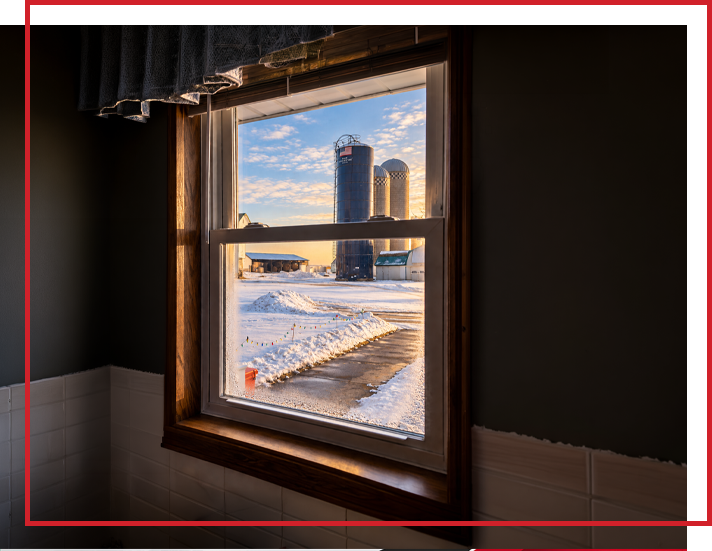
Moisture on the outside of the glass is a separate condition and is not, by itself, evidence of window failure.
Why Does One Window Get Wet While Another Stays Clear?
One window may face more wind, sit behind a tightly closed blind, receive less warm room air, or have different glass, framing, age, or installation details. Bathrooms and kitchens may also have higher moisture levels than nearby rooms.
If several windows develop a light band of moisture during the same cold snap, indoor humidity and temperature are sensible places to start. If one window repeatedly ices while similar nearby windows stay clear, that opening deserves a closer look.
Can Good or New Windows Still Have Condensation?
Yes. Better-insulated windows generally keep the inside glass warmer, but even a good window can develop condensation during extreme cold when indoor moisture is high enough.
Some homes also retain more moisture after drafty windows are replaced or other air leaks are sealed. That does not make new windows defective; it means moisture removal and ventilation may deserve attention as the house becomes tighter.
Window ratings such as U-factor and condensation resistance can help compare products, but they do not promise condensation-free glass in every home.
What Should You Try Before Blaming the Windows?
Everyday life adds moisture indoors: cooking, showers, laundry, humidifiers, houseplants, damp basements, and even breathing. The goal is not to make your home uncomfortably dry. It is to keep moisture appropriate for the weather.
- Wipe the glass, sill, and track dry so water does not sit against finishes or hardware.
- Check indoor relative humidity with an inexpensive digital hygrometer, and compare it with the outdoor temperature.
- If you use a humidifier, consider lowering its setting during cold snaps. Use kitchen and bathroom exhaust fans that vent outdoors when producing moisture.
- Open blinds or curtains when practical so room air can circulate across the glass. Keep heating registers clear.
- Watch the pattern: every window or one, one room or the whole house, severe cold or rain.
One cold morning gives you information. A repeated pattern tells you much more.
When Should You Pay More Attention?
A little moisture during a bitter cold snap is different from water repeatedly running down the glass or thick ice building in the track. Take a closer look when you notice:
- Water repeatedly pooling on the sill or trim
- Peeling paint, soft wood, staining, swelling, or suspected mold
- Heavy frost during less-extreme winter weather
- Fog trapped between insulated panes
- Drafts, unusually cold areas, or one window much wetter than similar nearby windows
- A frozen track or hardware that prevents the window from operating
Important for bedrooms: windows intended for emergency escape must remain operable. Don’t let ice freeze them shut, and keep exterior window wells clear of snow and debris.
A Central Minnesota Window Is Asked to Do a Lot
A window may separate a comfortable 70°F room from air well below zero. Glass, coatings, spacers, framing, weatherstripping, and installation details all affect how it performs. But none of those components can change the relationship between moisture, temperature, and dew point.
Sometimes the answer is to lower indoor humidity or improve airflow. Sometimes an air leak, installation detail, failed glass seal, or aging window needs attention. Condensation is a clue; the pattern helps tell you what to investigate.
Before You Decide to Replace a Window
When you wake up to wet or frosty glass, start with three questions: Where is the moisture? What are the outdoor temperature and indoor humidity? Is it happening throughout the house or only at one opening?
Sometimes the solution is a dry towel and a humidity adjustment. Sometimes the glass unit or window deserves an inspection. Either way, understanding the cause is more useful than assuming a wet window is a bad window.
BD Exteriors has helped Central Minnesota homeowners with windows and other exterior projects since 2001. If moisture continues after humidity and airflow have been addressed—or you notice trapped fog, drafts, damage, or operating problems—we can help you determine what deserves attention. Contact us today for a no-pressure windows quote!