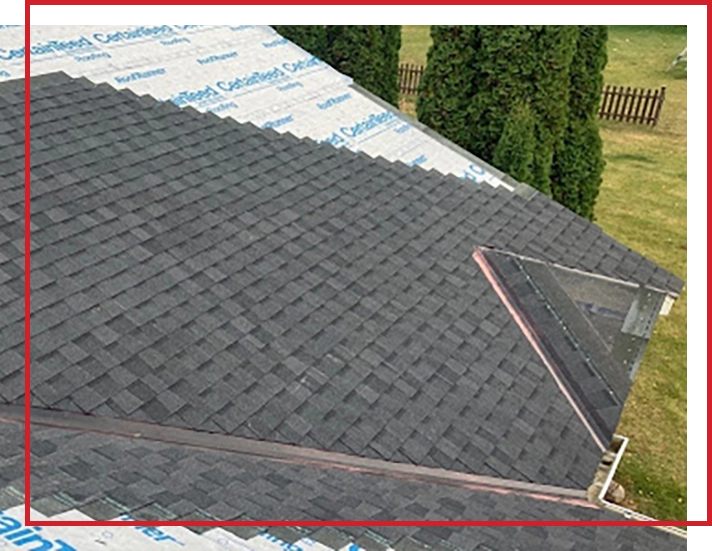
2. Shingle Quality Plays a Major Role
Not all shingles are created equal. Roofing materials vary significantly in thickness, durability, and weather resistance. Basic 3-tab shingles are thinner and typically have shorter lifespans, while architectural shingles provide stronger construction and better durability.
For many homes in Central Minnesota, architectural shingles like CertainTeed Landmark or Landmark Pro offer a great balance of performance and value. However, for homeowners seeking even greater durability, CertainTeed NorthGate ClimateFlex shingles offer an additional level of protection.
NorthGate shingles feature:
- Class 4 impact resistance, one of the highest ratings available for asphalt shingles
- Thicker construction designed to handle severe weather
- ClimateFlex technology that maintains flexibility in cold temperatures
- Strong wind resistance and long-term durability
- In areas prone to hail or severe storms, upgrading to a higher impact-rated shingle can significantly extend the life of a roofing system.
3. Attic Ventilation & Insulation Work Together
Ventilation is one of the most overlooked factors affecting roof lifespan—but it doesn’t work alone. Proper attic insulation and ventilation must work together to regulate temperature and moisture.
Without proper ventilation, hot air becomes trapped in the attic. During summer, attic temperatures can reach 150°F or more, baking shingles from below and accelerating aging.
Poor insulation can also create major winter problems. When warm air escapes from the home into the attic, it melts snow on the roof. That water then refreezes near the eaves, leading to ice dams and moisture damage.
A properly designed roofing system includes:
- Balanced intake ventilation (soffit vents)
- Exhaust ventilation (ridge vents)
- Proper attic insulation levels
- Air sealing to prevent heat loss
When insulation and ventilation work together, they help protect both the roof structure and the shingles themselves.
4. Minnesota Weather Is Tough on Roofing
Roofs in Central Minnesota endure some of the most demanding weather conditions in the country. Over time, roofing systems must handle:
- Heavy snow loads
- Freeze–thaw cycles
- Hailstorms
- Strong winds
- Intense summer sunlight
Homes located in open areas or exposed to frequent wind patterns may see faster wear compared to homes in sheltered neighborhoods. Choosing roofing materials designed for harsh climates helps extend the lifespan of the entire system.
5. Small Problems That Go Unnoticed
Many roofing failures begin with small problems that go unnoticed. Over time, minor issues can lead to major damage if they aren’t addressed early.
Examples include:
- Missing shingles after windstorms
- Flashing separation around vents or chimneys
- Clogged gutters that allow water to back up
- Early granule loss on aging shingles
Routine inspections can catch these problems before they shorten your roof’s lifespan or cause interior damage.
What a Long-Lasting Roof Actually Requires
Roofs that last 25–30 years or more usually share several common characteristics:
- High-quality architectural shingles
- Proper installation techniques
- Balanced attic ventilation and insulation
- Durable flashing and underlayment systems
- Periodic inspections and maintenance
When these components work together, a roof can perform reliably for decades—even in Minnesota’s demanding climate.
Planning a Roof Replacement in 2026?
If your roof is approaching 20 years old or beginning to show signs of wear, now is a good time to start planning ahead.
BD Exteriors installs complete roofing systems designed for long-term durability in Central Minnesota. Our team helps homeowners choose the right materials, ensure proper installation, and protect their homes against the region’s harsh weather.
Contact BD Exteriors for a free roof inspection and consultation.
We proudly serve homeowners across:
- St. Cloud
- Sartell
- Sauk Rapids
- Monticello
- Foley
- Clearwater
- Cold Spring and the surrounding communities.