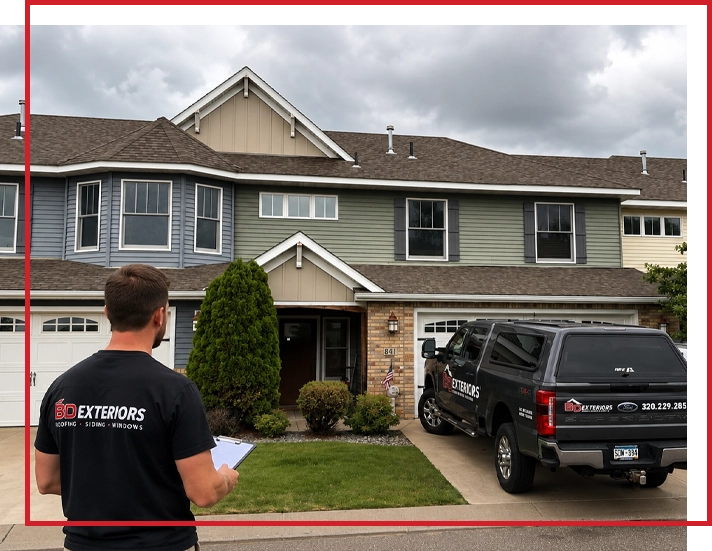
Exterior Clues We Can See From the Street
When a BD Exteriors project consultant arrives for an appointment, the inspection doesn’t begin when the ladder comes off the truck. In many ways, it begins as soon as we turn onto your street.
Years of experience naturally train you to notice patterns. Without even realizing it, you’re observing how a home sheds water, how sunlight hits different roof slopes, whether gutters appear level, or if one side of the home seems to weather differently than another.
None of these observations mean something is wrong.
They’re simply the first clues that help us understand how your home has aged and what questions we may want to ask during a closer inspection.
1. The Roofline
One of the first things we notice is the roof’s shape.
Does it appear straight? Are there subtle dips or waves? Do different sections appear to have aged differently?
Most variations are perfectly normal, but the overall roofline tells us where to pay closer attention once we’re on the roof.
2. Gutters That Tell a Story
From the driveway, gutters can reveal more than many homeowners realize.
We often notice:
- areas where water may have overflowed
- sections pulling slightly away
- staining below joints
- uneven alignment
- signs of previous repairs
Gutters don’t just carry water—they leave clues about how water has been behaving around the home.
3. Sunlight &and Shade
Not every side of a home experiences the same weather. South-facing roof slopes often age differently than north-facing ones.
Tree cover, shade, and moisture all influence how roofing and siding weather over time.
Two roofs installed on the same day can look surprisingly different years later simply because of their environment.
4. Roof Penetrations
Even from the ground, we look for areas where the roof has been interrupted.
Plumbing vents. Chimneys. Skylights. Exhaust vents.
Every penetration is another place where proper flashing matters.
These aren’t problems by themselves—they’re simply areas that deserve closer attention during an inspection.
5. Siding Patterns
We often notice subtle differences in siding long before standing next to it.
Color fading. Loose panels. Warping. Impact marks. Caulk condition.
Sometimes these are signs of normal aging. Other times, they point to areas worth a closer look.
6. Windows That Reveal More Than You Think
Windows can tell us quite a bit from the driveway. We notice:
- fogged insulated glass
- worn exterior trim
- failed caulking
- uneven spacing
- staining below windows
These details help us understand how well moisture has been managed over time.
7. Landscaping & Drainage
Believe it or not, we spend time looking at the ground.
Where does the yard slope? Do downspouts discharge properly? Are mulch beds built up against siding? Is water likely to collect near the foundation?
Sometimes the healthiest exterior improvements begin with managing where rainwater goes after it leaves the roof.
8. Previous Repairs
Homes often tell us about their history.
Different colored shingles. Replacement siding pieces. Fresh caulk in one corner. A newer gutter section.
These details don’t necessarily indicate poor workmanship—they simply help us understand what the home has experienced over the years.
9. Ventilation Clues
We notice the balance of intake and exhaust ventilation. Even from the driveway, ridge vents, roof vents, and soffit design start to paint a picture of how the attic may be performing.
Ventilation isn’t something most homeowners think about every day, but it plays an important role in a roofing system’s long-term health.
10. The Home as a Complete System
Perhaps the biggest thing we notice isn’t one product. It’s how everything works together.
Roofing. Siding. Windows. Doors. Gutters. Drainage.
Every component influences the next.
Viewing the home as one connected exterior system often reveals more than focusing on a single product.
Did You Know?
Experienced exterior professionals often begin forming inspection questions before they ever climb onto the roof. You can spot many important clues from the driveway by understanding how different exterior components interact over time.
A Minnesota Perspective
Minnesota homes endure heavy snow loads, spring rains, hail, strong winds, and significant temperature swings every year.
Because of these conditions, experienced project consultants pay close attention to how water drains, how different roof slopes weather, and how seasonal exposure affects the home’s exterior. Two neighboring homes built by the same builder can age very differently depending on sunlight, tree cover, maintenance, and previous repairs.
Learn What Your Home Is Telling You
A professional inspection isn’t about searching for problems.
It’s about understanding the story your home is already telling.
Many of the observations we make in the first few minutes simply guide where we look more closely later. By understanding these clues, homeowners can better appreciate how their home changes over time and why no two houses age exactly alike.
If you need roofing or exterior repairs, or just have questions about your home, contact us today to learn from our exterior professionals!